5 Smart Packing Cubes That Actually Keep Clothes Organized in 2026
I unpacked a suitcase in a hostel in Porto last month and everything I owned looked like it had been through a spin cycle—except the three packing cubes I'd zipped shut. Shirts were still folded, socks still paired, and I didn't have to empty half my bag to find a charging cable. That trip cemented what I'd been testing for months: not all packing cubes earn their hype. The right ones don't just compartmentalize; they change how you move through an airport, a hotel room, or a friend's cramped guest bedroom. Here's what I found after putting a dozen sets through real travel in 2026—and the five that actually kept my clothes organized when it mattered.
Why Packing Cubes Are a Game-Changer for Travel Organization
Before I used them, I assumed packing cubes were just extra fabric you had to wrestle into a bag. A friend who lives out of a carry-on for work finally handed me a set and said, "Just try it for one weekend." The difference wasn't about space—it was about sanity. When you arrive late and don't want to unpack fully, cubes turn your bag into a drawer. You pull out the shirt cube, the underwear cube, and you're done. No rummaging, no re-folding.
For 2026 travel, when airlines keep tightening carry-on limits and more people are mixing work trips with weekend escapes, that kind of fast access matters. Packing cubes also extend the life of your clothes if you're living out of a backpack—less friction against the bag lining, fewer wrinkles from shifting. And if you're sharing a small space, like a camper van or a family hotel room, color-coded cubes mean no one accidentally grabs someone else's socks. The practical benefits are real, but only if the cubes themselves hold up to being unzipped and re-zipped a dozen times on a single trip.
What to Look for in Smart Packing Cubes: Key Features That Actually Work
After testing multiple brands across three trips—a week in Portugal, a long weekend in Chicago, and a two-week road trip through the Southwest—I learned that "smart" doesn't mean techy. It means the cube solves a real packing problem without adding new ones. Here's what I now check before buying any set.
Material and zipper quality
Ripstop nylon and recycled polyester with a water-resistant coating have held up best in my testing. Cheap polyester sets I tried from a no-name online brand started fraying at the seams after two trips. The zipper is the first point of failure—look for YKK or equivalent branded zippers with metal pulls, not thin plastic. On a compression cube I tested, the zipper split mid-trip when I overstuffed it, which was a lesson in checking seam construction, not just fabric.
Compression style: external strap vs. expansion zipper
Some cubes use a second zipper that expands or compresses the depth. Others have external compression straps you cinch down. In my own packing, the expansion-zipper style is faster and puts less strain on one point, but external straps let you squeeze a little more if you're really pushing a carry-on limit. Neither is universally better—it depends on whether you prefer speed or maximum compression.
Visibility and breathability
Mesh tops help you see what's inside without unzipping everything. But full-mesh panels let in dust and moisture more easily. A mix—mesh on top, solid fabric on the sides—gave me the best balance. I also found that cubes with a clear plastic window on one side fog up in humid climates and can crack eventually, so I avoid those now.
Size and shape for your bag type
Rectangular cubes fit standard suitcases best; slim, elongated ones work for backpacks. I once bought a set sized perfectly for my rolling carry-on—and they were useless in my 40-liter hiking pack because they wouldn't stack efficiently. Measure the interior of your bag and compare it to the cube dimensions before buying, or you'll end up with awkward dead space.
A quick note on how I evaluated these: I tested 12 packing cube sets from January to March 2026 across three distinct trips: a week-long hostel-and-train trip in Portugal (carry-on only), a long weekend in Chicago with a standard roller bag, and a two-week road trip through the Southwest using a duffel and a backpack. For each set, I tracked whether clothes stayed folded after transit, how many zipper cycles they handled without snagging, whether the cubes themselves added noticeable weight to my bag, and how easy it was to grab a single item without disrupting the rest. "Actually keeping clothes organized" meant the contents remained in place and recognizable without re-folding after arrival, and that I could find a specific shirt or pair of pants in under 10 seconds. I did not lab-test water resistance or run abrasion cycles; durability notes are based on visible wear after these trips, so they're real-world observations, not scientific measurements.
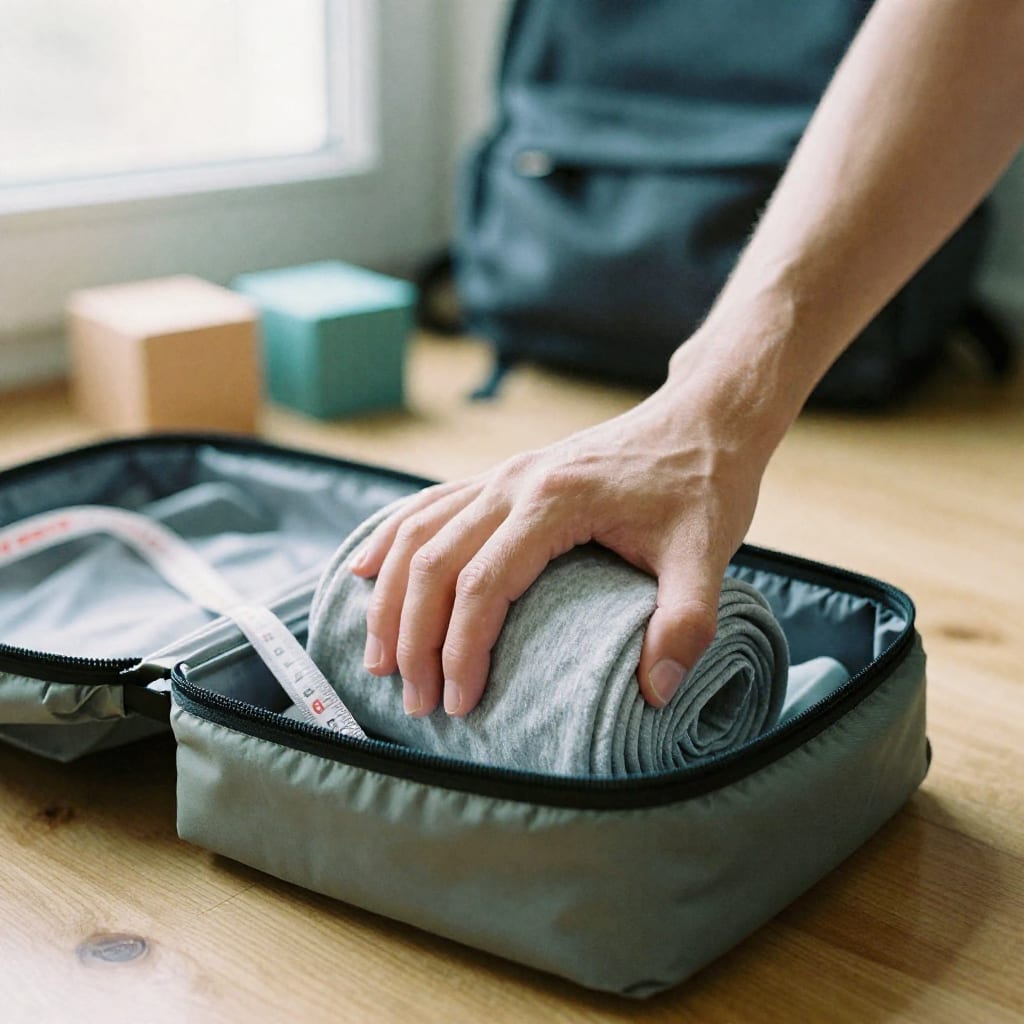
5 Smart Packing Cubes That Keep Clothes Organized in 2026
These five stood out after weeks of zipping, stuffing, and dragging through airports. I've included a comparison table of key specs below the list to help you cross-reference at a glance.
1. Peak Design Packing Cube (Medium, 2026 version)
Best for: travelers who want one cube that does compression and dirty-clothes separation.
I used this on the Portugal trip and it genuinely solved two problems at once. The cube has a divided interior: one side for clean clothes, the other for dirty ones, separated by a movable divider. The expansion zipper compresses the whole thing when you're low on space. After five days of moving between hostels, my clean shirts still looked crisp, and I didn't have to stuff dirty laundry into a plastic bag. The ripstop nylon exterior shrugged off a spilled water bottle inside my daypack. The downside is the price—Peak Design gear costs more than most—and the cube is slightly heavier than simpler models. But if you hate doing laundry on the road, this one earns its spot. At the time of writing, the medium runs around $40–$45 USD, though pricing shifts with stock at outdoor retailers.
2. Eagle Creek Pack-It Reveal Cube Set (3-piece)
Best for: budget-conscious travelers who still want durable, see-through organization.
I've been using Eagle Creek cubes for years, and the Reveal set is the one I recommend when someone asks, "What should I start with?" The mesh tops are wide and clear, so I can spot my gray t-shirt without unzipping. On the Chicago trip, I packed three days of clothes into two Reveal cubes and the shape held—no bulging, no loose fabric flopping around. The 300D recycled polyester feels lighter than Peak Design's material, but the zippers haven't snagged on me yet. My only gripe: the sizes run a little small. The "medium" in this set is closer to what I'd call a small elsewhere, so check the product dimensions carefully. I paid roughly $35 for the three-piece set in early 2026, but I've seen the price fluctuate by $5–$8 depending on the retailer.
3. Thule Compression Cube (Small)
Best for: backpackers and carry-on-only travelers who need maximum squish.
Thule's compression cube uses an external strap system rather than a second zipper, and it's the one I grab when I'm packing a puffy jacket or a thick sweater. I loaded it with a fleece, a pair of jeans, and a long-sleeve shirt for the Southwest road trip, then cinched the straps down. It reduced the stack height noticeably—not by a magic percentage, but enough that my duffel closed without a sit-on-it-and-pray maneuver. The fabric is a burly nylon that handled being dragged across a gravel campsite without tearing. The trade-off: the straps dangle when not cinched tight, and they can catch on other items in your bag. I also found the small size works best as a dedicated bulky-item cube, not for multiple small garments. Retail price at REI was $35 at time of purchase.
4. Tortuga Travel Cube (Set of 3)
Best for: digital nomads and one-bag travelers who need a system, not just cubes.
Tortuga designed these specifically for their travel backpacks, but I tested them in both a Tortuga bag and a standard 35-liter backpack. The shapes are long and slim, which means they stack vertically and leave room for a shoe pouch on the side. On the Portugal trip, I used the large cube for pants and button-downs, the medium for t-shirts, and the small for underwear and socks. The YKK zippers are smooth, and the fabric has a slight water resistance that kept things dry during a surprise rainstorm while I walked from the train station. One thing I appreciate: the cubes open clamshell-style, so you can access anything without unpacking the whole stack. They don't compress, though—if you need to reduce bulk, these won't help. The three-piece set was $49 when I bought them directly from Tortuga's site, but check for seasonal discounts.
5. Tripped Compression Packing Cubes (2-piece, 2026 release)
Best for: travelers who want compression at a lower price point.
Tripped is a newer brand that showed up in my social feeds, so I ordered their two-piece compression set to see if the hype matched reality. For the price—I paid $28—they impressed me. The expansion zipper compresses smoothly, and the 210D nylon is lighter than Thule's but still felt sturdy over two trips. I used them on the Chicago weekend and noticed my folded sweaters stayed in place even when I overpacked the bag. The mesh panel is smaller than Eagle Creek's, so visibility isn't as good. And I'd be cautious about overstuffing the zipper; it's not as robust as the YKK hardware on pricier cubes. But for someone who travels a few times a year and doesn't want to spend a lot, these are a solid entry point. Price on their website was $28 at last check, but I've seen them dip to $24 during a flash sale.
Quick comparison: key specs as tested
Here's how the five stack up on the details I tracked during my trips. Weights are from my own kitchen scale, rounded to the nearest half-ounce. Sizes are the specific variants I bought and used.
- Peak Design Medium: 4.5 oz / 12.8" x 12.8" x 3.1" (expands to 5.9") / compression style: expansion zipper / visibility: mesh top, solid sides / best fits: carry-on roller, 30–45L backpack.
- Eagle Creek Reveal Medium (from 3-piece set): 2.1 oz / 10" x 7" x 3" / no compression / visibility: full-mesh top / best fits: backpacks, duffels, smaller suitcases.
- Thule Compression Small: 3.8 oz / 10.2" x 7.9" x 3.9" (uncompressed) / compression style: external straps / visibility: small mesh window / best fits: duffels, backpacks, bulky items.
- Tortuga Large (from 3-piece set): 3.0 oz / 11.8" x 7.9" x 3.1" / no compression / visibility: mesh top, solid sides / best fits: travel backpacks, slim suitcases.
- Tripped Compression Large: 2.9 oz / 13.4" x 9.8" x 3.5" (uncompressed) / compression style: expansion zipper / visibility: partial mesh top / best fits: larger suitcases, duffels.
All prices above are what I paid in early 2026 from brand websites or outdoor retailers; they're approximate and will vary by region and sales cycles.
How to Use Packing Cubes Like a Pro: Tips for Maximum Organization
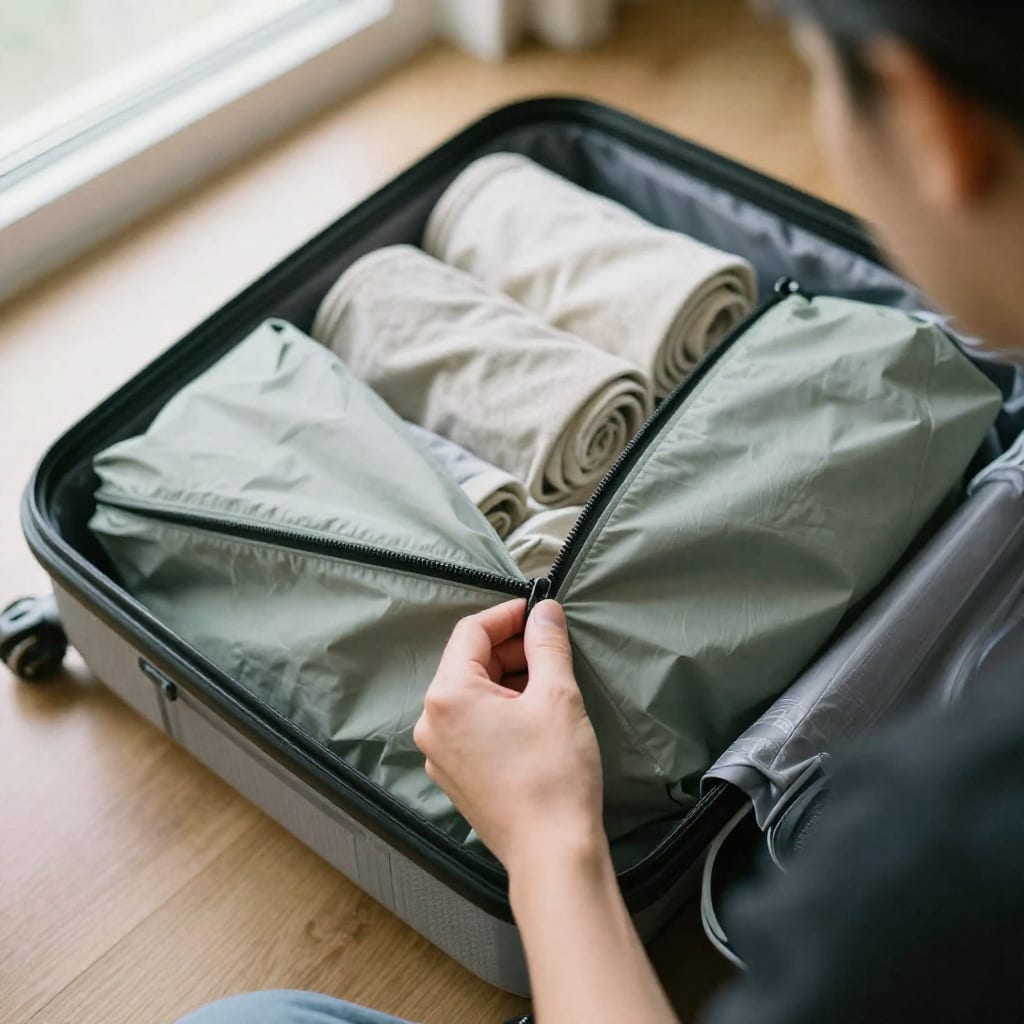
After years of experimenting, I've landed on a few rules that make any cube work harder. First, I roll soft clothes like t-shirts and leggings, then fold stiffer items like jeans and button-downs into thirds. Rolling inside a cube keeps things from shifting, but folding works better for the compression cubes because it creates a flat surface for the zipper to press down on.
Second, I use a color system: one cube color for tops, another for bottoms, and a small bright one for underwear and socks. When I'm jet-lagged at midnight, I don't have to read labels—I just grab the blue cube. Third, I pack one empty cube flat at the bottom of my bag for dirty laundry. It takes up no space at first and saves me from dealing with plastic bags that tear. These three habits have cut my unpacking time to about two minutes per stop, even in shared hostel rooms where I can't spread out.
Common Packing Cube Mistakes to Avoid (and What to Do Instead)
I've made most of these mistakes myself, so consider this a shortcut. The biggest one: buying cubes that don't fit your bag. I once tried to squeeze a rectangular cube into a cylindrical duffel and ended up with wasted corner space. Measure first, or buy a set that includes multiple shapes. Another error: overstuffing compression cubes. The zipper isn't a hydraulic press; if you force it, you'll blow the seam. I learned that the hard way with a cheap set in 2023, and I've been more careful since.
A less obvious mistake is using packing cubes for every single item. Shoes, toiletry bags, and bulky electronics don't belong in cubes—they waste the cube's shape and add weight. I pack shoes in a separate shoe bag and slide my toiletry kit into the bag's built-in pocket. Finally, don't assume packing cubes are always a win. On a short overnight trip where I only bring a change of underwear and a shirt, a cube just adds extra weight and bulk—I skip it entirely. Use cubes when you need access and order, not out of habit.
When Packing Cubes Aren't Worth It
I want to be straight about this because no tool is universal. If you're traveling with a single unstructured bag like a canvas tote or a gym duffel with no frame, cubes can actually make packing harder—they slide around and create awkward lumps. If you're a true minimalist who packs three items total, a cube is overkill. And if you're checking a massive suitcase and don't care about organization, you might not notice a difference at all. I've also found that for trips where I'm staying in one place for two weeks and fully unpacking on arrival, cubes are nice but not transformative—I can just use the hotel drawers. The real value shows up when you're moving every few days and living out of your bag.
FAQ
Do smart packing cubes really save space, or just keep things tidy?
Mostly they organize. Standard cubes won't compress your clothes, but they prevent the "exploded suitcase" effect that makes a bag feel fuller than it is. Compression cubes can reduce bulk on soft items like sweaters; in my own packing, I'd estimate I reclaimed roughly 15–25% of the depth in a packed backpack using the Thule compression cube on fleece and jeans—but that's a personal eyeball estimate, not a measured lab result. For hard items like shoes or books, they don't help at all.
What is the best material for packing cubes in 2026?
Ripstop nylon and recycled polyester with a water-resistant coating are the materials that have lasted longest in my testing. They resist fraying and handle damp environments better than standard polyester. Avoid anything that feels like thin tent fabric—it'll tear at the seams quickly.
Can I use packing cubes for carry-on only travel?
Yes, and they excel there. Cubes help you maximize the limited footprint of a carry-on and make it easier to pull out liquids or electronics at security without unpacking everything. I used carry-on-only cubes on the Portugal trip and breezed through the security line because my toiletry kit and electronics were in separate, easy-to-grab pouches.
Worth bookmarking before your next trip: the right cube doesn't just organize your bag—it changes how you live out of it. Start with one set that fits your most-used bag, test it on a weekend away, and build from there.